Patient Synonyms: 18 Other Ways to Say Patient (With Examples & Usage Tips)
Quick Answer: The best synonyms for patient (the adjective) are calm, tolerant, composed, and unflappable. Use calm for everyday steadiness, tolerant for accepting others’ flaws, composed for grace under pressure, and unflappable for total unshakeability.
🕑 ≈ 6 min read
🔄 Updated Oct 2026
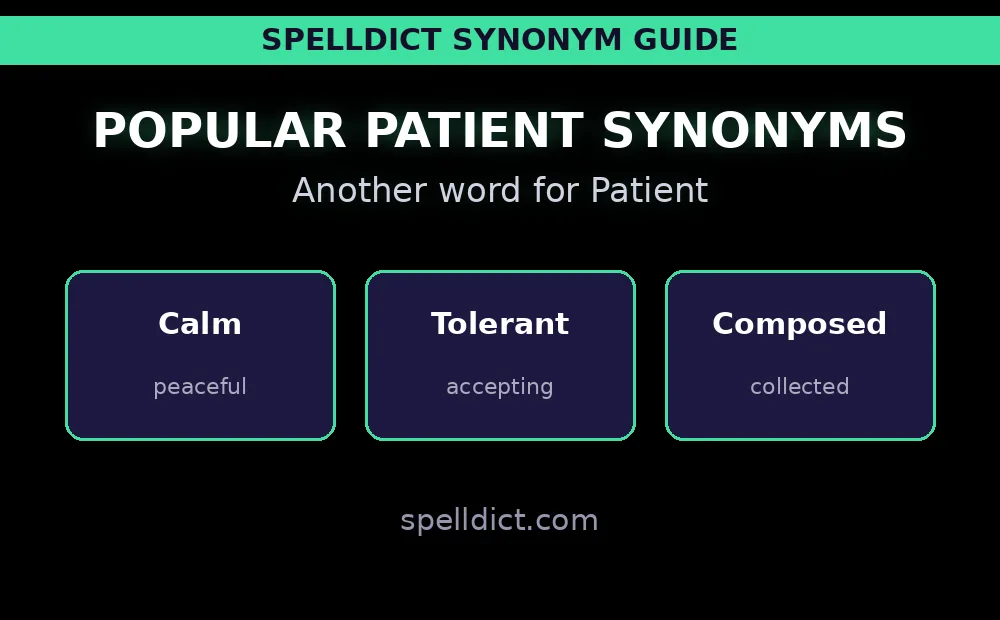
Table of Contents
18 Other Ways to Say Patient
Describing someone as “patient” is a compliment — but these 18 synonyms say it with more color. From the easy warmth of “easygoing” to the steel of “stoic”, each word captures a different shade of staying calm.
Tolerant
Meaning: Able to accept differences and annoyances without anger.
When to use: Describing acceptance of people and ideas.
When to avoid: Describing physical endurance.
- A good teacher is tolerant of different learning speeds.
- She remained tolerant even when the neighbors were noisy.
- Tolerant managers listen before they judge.
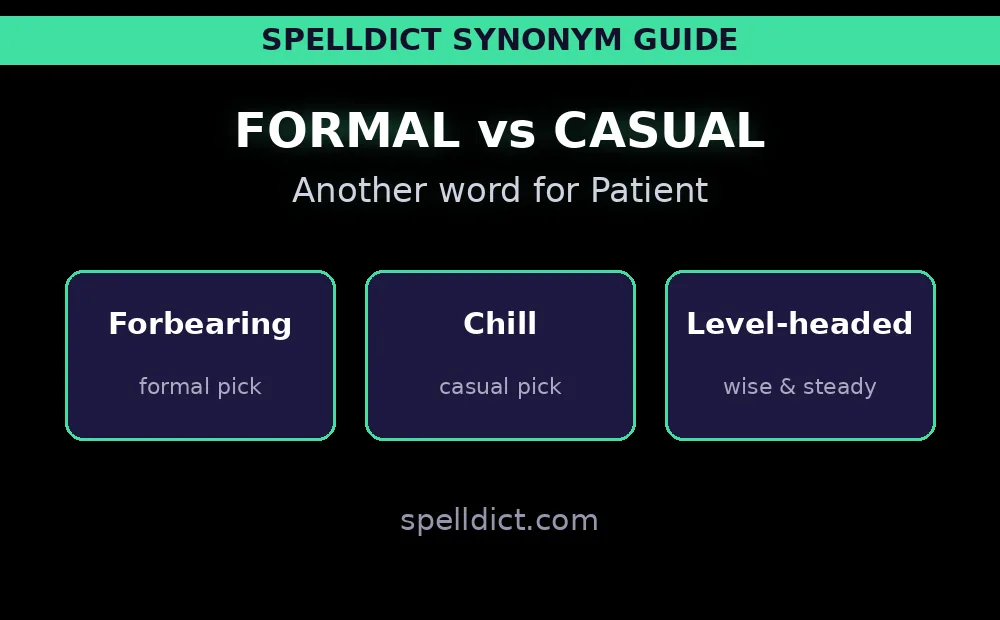
Forbearing
Meaning: Holding back anger or frustration with quiet strength.
When to use: Formal writing and serious challenges.
When to avoid: Casual chat, where it sounds stiff.
- The forbearing nurse never raised her voice once.
- He was forbearing with the rude customer at the counter.
- Forbearing leaders earn loyalty that shouting never wins.
Calm
Meaning: Peaceful and not easily disturbed.
When to use: Everyday situations and simple descriptions.
When to avoid: When you need a stronger or more formal word.
- She stayed calm while the baby cried through the night.
- The calm driver waited without honking in the traffic jam.
- His calm reply ended the argument before it started.
Composed
Meaning: Calm and in control of emotions, especially under pressure.
When to use: Professional settings, crises, and public speaking.
When to avoid: Describing a naturally slow pace.
- The pilot remained composed during the turbulence.
- She gave a composed answer to the tricky question.
- Composed athletes make better decisions in finals.
Unflappable
Meaning: Impossible to disturb or upset; always steady.
When to use: High-pressure jobs and emergencies.
When to avoid: Describing gentle kindness — it means steadiness, not warmth.
- The unflappable surgeon handled the complication smoothly.
- She is unflappable even when plans fall apart.
- Unflappable customer service reps save difficult calls.
Enduring
Meaning: Able to last through hardship without giving up.
When to use: Long struggles, relationships, and tough times.
When to avoid: Short, minor delays.
- Their enduring friendship survived twenty years apart.
- She showed enduring grace through the long illness.
- Enduring hope kept the team going all season.
Long-suffering
Meaning: Patiently bearing pain or trouble over a long time.
When to use: Emotional writing and serious hardships.
When to avoid: Light everyday contexts, where it feels too heavy.
- The long-suffering fans finally celebrated a championship.
- She was long-suffering with her aging parents’ needs.
- His long-suffering smile hid years of struggle.
Even-tempered
Meaning: Having a steady mood that rarely swings.
When to use: Describing reliable personalities.
When to avoid: One-time calm behavior.
- Even-tempered parents handle teenage drama with ease.
- Her even-tempered nature makes her a trusted friend.
- The even-tempered coach never yells from the sidelines.
Level-headed
Meaning: Calm and sensible, thinking clearly under pressure.
When to use: Decision-making, leadership, and crises.
When to avoid: Purely emotional situations.
- We need a level-headed person to lead this project.
- His level-headed advice saved the company money.
- Stay level-headed when everyone else panics.
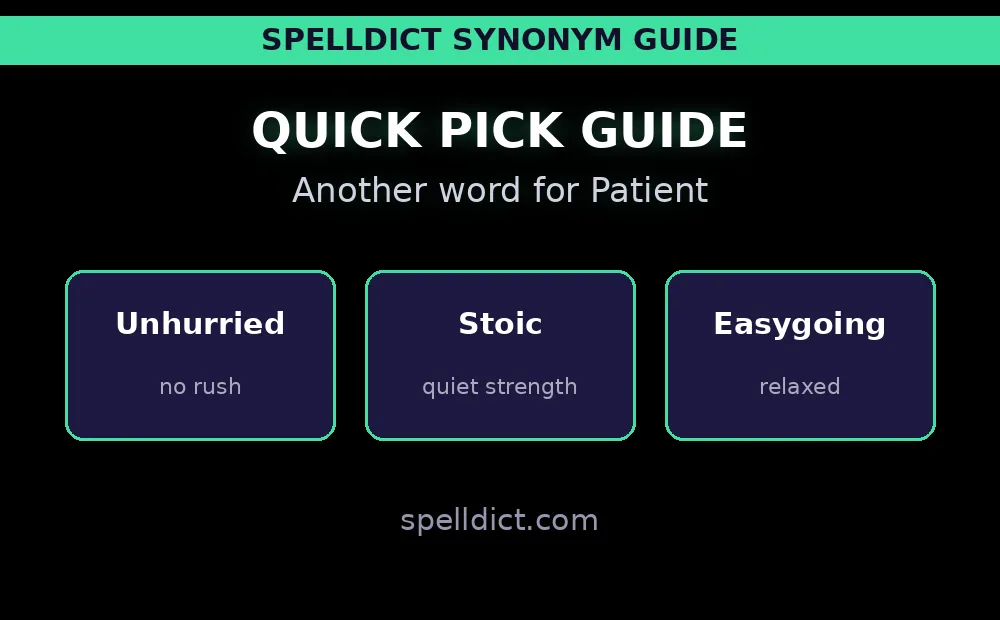
Unhurried
Meaning: Moving or acting without rushing.
When to use: Describing a relaxed pace and mindful living.
When to avoid: Urgent situations that need speed.
- They enjoyed an unhurried breakfast on the sunny terrace.
- Her unhurried manner puts nervous clients at ease.
- The unhurried walk through the park cleared his mind.
Easygoing
Meaning: Relaxed and not easily stressed or annoyed.
When to use: Casual descriptions and friendly personalities.
When to avoid: Formal writing.
- His easygoing attitude makes him fun to travel with.
- An easygoing boss creates a calmer workplace.
- She stayed easygoing even when the flight was canceled.
Stoic
Meaning: Bearing pain or difficulty without showing emotion.
When to use: Serious hardships and quiet courage.
When to avoid: Warm, expressive situations.
- The stoic firefighter never complained about the danger.
- She accepted the bad news with a stoic nod.
- His stoic silence impressed the whole courtroom.
Steadfast
Meaning: Firm and loyal, staying patient over time.
When to use: Commitments, beliefs, and long-term support.
When to avoid: Short-term waiting.
- She remained steadfast in her support for her friend.
- The steadfast volunteer showed up every single weekend.
- His steadfast patience finally paid off.
Gentle
Meaning: Kind and soft in manner, never harsh.
When to use: Describing kindness toward people and animals.
When to avoid: Describing toughness or endurance.
- The gentle teacher never raised her voice.
- He spoke in a gentle tone that calmed the child.
- Gentle handling is essential with rescue animals.
Understanding
Meaning: Sympathetic and willing to see others’ point of view.
When to use: Relationships, conflicts, and customer care.
When to avoid: Purely physical waiting situations.
- An understanding manager approved her leave request.
- He was understanding when I explained my mistake.
- Understanding friends don’t rush your healing.
Relaxed
Meaning: Free from tension and stress.
When to use: Casual settings, vacations, and attitudes.
When to avoid: High-stakes professional contexts.
- The relaxed atmosphere helped everyone open up.
- She felt relaxed knowing the deadline was extended.
- A relaxed driver makes passengers feel safe.
Deliberate
Meaning: Careful and intentional, never rushed.
When to use: Decision-making, planning, and craftsmanship.
When to avoid: Describing emotional calmness.
- She took deliberate steps to rebuild her career.
- His deliberate speech gave weight to every word.
- The artist’s deliberate brushstrokes took hours.
Resigned
Meaning: Calmly accepting what cannot be changed.
When to use: Unavoidable situations — with nuance.
When to avoid: Contexts needing hope or action; it can sound defeatist.
- He was resigned to the long delay at the airport.
- She gave a resigned sigh and started over.
- The team felt resigned after the third postponement.
Formal vs. Casual: Choosing the Right Patient Synonym
From formal reports to friendly chats, patience has a word for every setting. Use this table to pick the right level of polish.
| Synonym | Formal Example | Casual Example |
|---|---|---|
| Forbearing | The forbearing manager tolerated the delays. | Our chill boss didn’t even mind the delays. |
| Composed | She remained composed throughout the crisis. | She kept her cool the whole time. |
| Unflappable | The unflappable pilot landed the plane safely. | Nothing rattles that pilot, honestly. |
| Stoic | He faced the loss with stoic dignity. | He took the bad news like a champ. |
| Level-headed | A level-headed response prevented panic. | He kept a clear head and sorted it out. |
| Even-tempered | Her even-tempered leadership steadied the team. | She’s super steady — never freaks out. |
| Deliberate | He made a deliberate choice after reflection. | He took his time and thought it through. |
| Tolerant | The school promotes a tolerant environment. | Everyone here is really accepting. |
| Long-suffering | The long-suffering staff endured the chaos. | Those poor guys put up with so much. |
| Resigned | She was resigned to the outcome. | She just accepted it and moved on. |
Common Mistakes When Using Patient Synonyms
Patience words are easy to misuse. Steer clear of these four common mistakes.
Using “patient” for the hospital noun
In “the patients waited”, patient means a sick person. For the personality trait, say “a patient person” to avoid confusion.
Calling someone “stoic” when you mean “friendly”
Stoic means unemotional and controlled — not warm. For warm patience, use “gentle” or “good-natured”.
Using “resigned” as pure praise
Resigned hints at giving up. For positive calm, choose “composed” or “level-headed” instead.
Mixing up “tolerant” and “easygoing”
Tolerant means accepting differences in others; easygoing means relaxed overall. They overlap, but they are not identical.
FAQs About Patient Synonyms
What is a gentle word for a patient person?
“Gentle”, “easygoing”, and “good-natured” all describe patient people warmly — perfect when you want kindness, not just endurance.
What is the most formal synonym for patient?
“Forbearing” and “composed” are the most formal choices, ideal for professional writing, references, and serious contexts.
Is “calm” a synonym for “patient”?
They are close cousins: calm describes a peaceful state of mind, while patient describes the behavior of waiting well. A calm person is usually patient, too.
What is the opposite of patient?
The direct opposite is “impatient”. For stronger contrasts, try “hasty”, “irritable”, or “hot-headed”.
Can “patient” describe a slow process, not just a person?
Yes — “a patient investigation” or “patient craftsmanship” works well. For the same idea, “deliberate” and “unhurried” are excellent synonyms.
Final Thoughts on Patient Synonyms
A smart writer knows that patience comes in many shades — the strong steel of “stoic”, the easy warmth of “easygoing”, the happy steadiness of “even-tempered”. Choose the shade that fits your sentence, and keep building your vocabulary at SpellDict. To dig deeper, see how synonyms work on Wikipedia, refine your word choice with Grammarly’s synonym tips, or trade examples with learners on r/EnglishLearning.