18 Other Ways to Say Community (With Examples & Usage Tips)
The best synonyms for community are society, neighborhood, tribe, network, circle, fellowship, association, group, team, and collective. Each one brings people together differently — this guide shows you exactly when to use each one, with examples.
⏱ 8 min read
📅 Updated: October 19, 2026
“Community” is everywhere — your street, your workplace, your group chat. But one word can’t capture every kind of togetherness. English offers richer synonyms for community, from local roots (neighborhood) to shared passion (tribe).
Below are 18 better ways to say “community”, each with its exact meaning, when to use it, when to avoid it, and natural examples. This guide is part of SpellDict‘s vocabulary series — see also our guides to synonyms for positive, synonyms for change, and synonyms for serious.
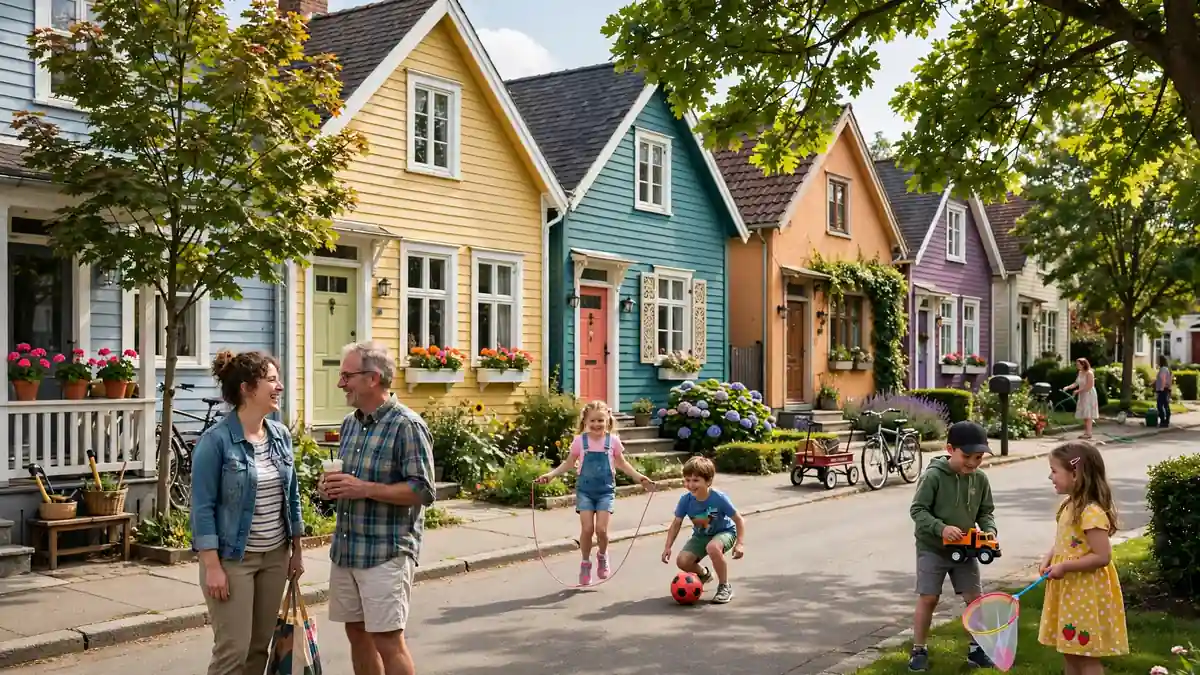
18 Different Ways to Say Community
1. Society
Meaning: A large, organized group of people sharing laws, customs, and values.
Use it when: talking about nations, cultures, or civilization as a whole.
Avoid it when: describing a small local group — society is big and broad.
- Modern society depends heavily on technology.
- She studies how ancient societies were organized.
- Our society values education and kindness.
2. Neighborhood
Meaning: The people living near you in a local area.
Use it when: describing local streets, events, and neighborly bonds.
Avoid it when: the group isn’t geographic — an online forum is no one’s neighborhood.
- Our neighborhood hosts a block party every summer.
- She knows every family in the neighborhood.
- The neighborhood raised money for the new park.
3. Tribe
Meaning: A close-knit group bound by shared identity, culture, or passion.
Use it when: describing loyal, like-minded people with strong belonging.
Avoid it when: writing about actual Indigenous peoples — outside that context it can feel appropriative.
- He found his tribe among fellow photographers.
- The running tribe meets at dawn every Saturday.
- She finally found a tribe that shares her values.
4. Network
Meaning: A connected system of people sharing support or opportunities.
Use it when: describing professional or online connections.
Avoid it when: you mean emotional closeness — networks are about connections, not warmth.
- She built a strong network of mentors in her field.
- The alumni network helped him find a job.
- Online networks connect freelancers worldwide.
5. Circle
Meaning: A small, trusted group of people who know each other well.
Use it when: describing intimate groups of friends or colleagues.
Avoid it when: the group is large or formal — circles are small by nature.
- He was welcomed into her inner circle of friends.
- Their family circle gathers every Sunday.
- She shared the news only with her closest circle.
6. Fellowship
Meaning: A warm, supportive group sharing values or a purpose.
Use it when: describing spiritual, academic, or close supportive groups.
Avoid it when: talking casually — fellowship has a gentle, formal ring.
- The writing fellowship mentored young authors.
- Their fellowship grew stronger through the hardship.
- A fellowship of volunteers rebuilt the shelter.
7. Association
Meaning: A formal group organized around a shared purpose or profession.
Use it when: referring to professional bodies or official member groups.
Avoid it when: describing casual friendships — associations have rules and dues.
- The teachers’ association held its annual conference.
- She joined the local artists’ association.
- The homeowners’ association set new parking rules.
8. Group
Meaning: A number of people gathered by a shared interest or goal.
Use it when: you need a simple, neutral word for any collection of people.
Avoid it when: you want warmth or identity — group is plain and generic.
- Our hiking group meets every weekend.
- She leads a study group for final exams.
- The support group helped him through recovery.
9. Team
Meaning: A group working together toward a shared goal.
Use it when: describing sports, projects, or workplaces with cooperation.
Avoid it when: there’s no shared task — a crowd of strangers isn’t a team.
- Our project team finished two weeks early.
- The soccer team celebrated their championship.
- She is the heart of the marketing team.
10. Collective
Meaning: A group sharing work, decisions, and often ownership.
Use it when: describing artists, workers, or activists acting as one.
Avoid it when: the group has a strict hierarchy — collectives are egalitarian.
- The artist collective opened a shared gallery.
- Workers formed a collective to set fair wages.
- A farming collective shares tools and harvests.

11. Club
Meaning: A group organized around a shared hobby or interest.
Use it when: describing sports, books, or hobby groups with members.
Avoid it when: describing a whole town or society — clubs are interest-based.
- The chess club meets every Friday evening.
- She joined a photography club to learn more.
- The book club picked a new novel this month.
12. Crew
Meaning: A tight group working closely on a task or project.
Use it when: describing work teams, film sets, or friend groups with a mission.
Avoid it when: the tone must be formal — crew is casual and hands-on.
- The film crew worked through the night.
- Our sailing crew trains every weekend.
- He trusts his whole crew with the launch.
13. Brotherhood
Meaning: A deep bond of loyalty and friendship, often among men.
Use it when: describing strong, lasting ties of loyalty.
Avoid it when: the group includes women — “brotherhood” is gendered; “fellowship” is neutral.
- The teammates shared a true brotherhood.
- Years of service built a brotherhood among them.
- He spoke of the brotherhood of fellow hikers.
14. Union
Meaning: A group united for collective strength, often workers.
Use it when: describing labor groups or formal alliances.
Avoid it when: describing casual social groups — union implies organized purpose.
- The workers’ union negotiated better pay.
- The student union organized the festival.
- Their union gave them a stronger voice.
15. Gathering
Meaning: People coming together, often socially and temporarily.
Use it when: describing meetups, parties, or events.
Avoid it when: you mean a permanent group — a gathering ends when people leave.
- Our family gathering happens every holiday.
- She hosted a small gathering for close friends.
- The neighborhood gathering raised funds for charity.
16. Family
Meaning: People bound by blood, marriage, or deep emotional ties.
Use it when: describing the closest bonds — or groups that feel like one.
Avoid it when: the relationship is professional — calling coworkers “family” can ring hollow.
- She considers her oldest friends family.
- The team became like family after the long season.
- Family support carried him through the illness.
17. Organization
Meaning: A structured group with a defined purpose and rules.
Use it when: referring to charities, companies, or formal bodies.
Avoid it when: describing warmth and belonging — organizations are structured, not cozy.
- The charity organization feeds thousands weekly.
- He volunteers for a local environmental organization.
- The organization runs free weekend workshops.
18. Village
Meaning: A small, close-knit community where people know and help each other.
Use it when: evoking warmth, mutual care, and local roots.
Avoid it when: describing cities or online groups — village is small and place-based.
- It takes a village to raise a child, they say.
- The whole village turned out for the festival.
- She missed the close warmth of her home village.
Community Synonyms: Formal vs. Casual Usage
Not every synonym fits every situation. Use this table to pick the right one — and explore more guides like synonyms for positive and synonyms for explain.
| Situation | Best Picks |
|---|---|
| Formal writing / professional | society, association, organization, union, fellowship |
| Workplace | team, network, association, group, organization |
| Everyday conversation | neighborhood, group, club, circle, gathering |
| Emotional / personal | family, tribe, fellowship, village, circle |
| Creative writing | tribe, brotherhood, village, fellowship, collective |
Common Mistakes When Using Community Synonyms
- Calling an online group a “neighborhood”. Neighborhoods are physical places. For online spaces, “community” itself or “network” is honest — geography matters to the word. Grammarly’s guide to synonyms stresses matching each word’s precise shade to your context.
- Using “tribe” for Indigenous peoples casually. “Tribe” has a specific meaning for Indigenous nations. Using it as a trendy label for your fan group can offend — “circle” or “collective” is safer.
- Mixing up “team” and “group”. A team shares a goal and cooperates; a group just shares a trait. Calling classmates a “team” when they never work together sounds forced.
- Calling coworkers “family” too fast. It can feel manipulative in workplaces. “Team” or “crew” shows closeness without the baggage.

FAQs About Community Synonyms
What is the difference between “community” and “society”?
“Society” is large and structured — a nation or civilization. “Community” is smaller and warmer — people who share a place, interest, or bond.
What is the most formal synonym for “community”?
Association and organization are the most formal, suited to legal and professional writing. Fellowship is formal but warmer.
Where can I ask native speakers about subtle differences?
The r/EnglishLearning community on Reddit is a great place to ask native speakers which group word fits your exact context.
Which synonym works best for an online group?
Network fits professional online groups, while collective or circle suit creative and social ones. Avoid “neighborhood” — it’s a physical place.
Final Thoughts on Community Synonyms
People gather in a hundred ways, and English has a word for each. A shared street? Neighborhood. A shared mission? Team. A shared soul? Tribe. Pick the word that matches the bond, and your writing will feel like it belongs.
Keep building your vocabulary with SpellDict — words are how communities begin.